How to Set Up a Medication Schedule for a Parent with Dementia
Your mother asks the same question three times in five minutes. "Did I take my morning tablet?"
You check. Yes, she took it. Twenty minutes ago.
She doesn't believe you. Looks confused. Asks again after ten minutes.
You found empty pill bottles in her drawer last week. She took yesterday's dose again. Thankfully, it wasn't a dangerous medicine. But your heart sank knowing this could have been serious.
This isn't just forgetfulness anymore. This is dementia. And managing her medicines just became one of your most important jobs.
You're probably feeling overwhelmed. Scared. Responsible for something you never expected to handle. That's normal. Thousands of Indian families are in exactly your situation right now.
Why Dementia Makes Medication Management So Hard: Understanding The Problem
Memory loss changes everything about how the brain works. What used to be simple routines now feel impossible to your parent.
Taking medicine requires multiple steps. Remember which pill. Know what time. Remember how many. Check whether it was already taken. These steps need executive function. Decision-making. Recall.
Dementia damages exactly these abilities. Your parent can't do this anymore. Not because they're trying to be difficult. Because their brain genuinely can't manage it.
India has about 8.8 million people aged 60 and above living with dementia. Alzheimer’s disease accounts for the majority (around 60–70%) of cases. If prevalence remains similar, the number is projected to reach about 16.9 million by 2036. Millions of families face this exact challenge right now. You're not alone in this struggle.
The Real Numbers Behind Medication Management: Why This Matters
Research shows 54% of family caregivers manage medications in early-stage dementia. By later stages, this rises to 90%.
People with dementia often take a high number of medicines. Studies report a median of around 8 medications in some populations, and polypharmacy (5 or more medicines) is common. Different pills. Different times. Different things that need to be remembered. Every single day.
Many caregivers feel burdened by medication management. In one survey, about 39% reported burden, over half faced challenges with medication assistance, and around 37% dealt with medication refusal.
These aren't just statistics. Behind each number is a family. A caregiver exhausted at the end of the day. A parent confused and scared. A situation that feels impossible to manage.
Why This Task Falls On You: The Reality
Ideally, someone gets trained to manage this. A nurse. A professional caregiver. But that costs money most Indian families don't have.
So it falls on you. The son or daughter who lives nearby. Or the daughter-in-law. Or the eldest grandchild old enough to understand.
You didn't ask for this responsibility. But here it is.
The good news? It's absolutely manageable. With the right system and support. You're not going to mess this up. Thousands of families have figured this out. You can too.
Safety First: The Non-Negotiables (Before You Start)
Before we talk about schedules and systems, let's talk about the most important thing. Safety.
People with dementia may accidentally take extra doses. Your mother forgets she already took her medicine. Takes it again. This happens constantly.
Or she picks up the wrong bottle. Takes heart medication meant for blood pressure. This is dangerous.
Or she takes someone else's medicine. Your father's blood thinner. Your sister's antibiotic. Wrong medicine for her body.
Keep all medications in a locked drawer or cabinet. This isn't about trust. It's about preventing accidental overdose. Even over-the-counter medicines need to be secured.
Throw away expired medicines. Discontinued prescriptions. Medicines no longer in use. Keep only what's currently needed.
Never mix different medications in one container. One bottle should have one medicine. Not a mix of everything. If there's an emergency, doctors need to know exactly what was taken.
Keep medicines in original packaging whenever possible. Labels with dosage. Medicine name. Expiration date. All important.
If a dose is missed, do not double the next dose unless the doctor or pharmacist specifically advises it for that medicine. Contact them for guidance.
Steps to Set Up a Medication Schedule for a Parent with Dementia
Step 1: Make a Complete Medication List - The Foundation
Write down every single medicine. Don't skip anything.
Prescription drugs. Over-the-counter medicines. Vitamins. Herbal supplements. Ayurvedic medicines. Everything your parent takes.
For each medicine, write:
Full medicine name (don't use abbreviations)
Dosage (the amount)
Time it's taken (8 AM, 2 PM, etc.)
Whether it needs food or not
What it's for
Any special instructions
Keep this list updated. If the doctor stops a medicine, remove it. If a new medicine is added, add it.
Keep copies in multiple places. Your wallet. Pinned on the fridge. Saved on your phone. Give copies to family members.
In India, many elderly parents take multiple medicines from different doctors. Your father might see a cardiologist, a general physician, and an Ayurveda specialist. None of them know what the others prescribed.
This is dangerous. Your job is to know everything. Create one master list that shows all medicines from all doctors.
Step 2: Talk to the Doctor
Schedule a meeting with your parent's main doctor. Not a quick question during a visit. An actual conversation.
Ask which medicines are absolutely essential. Which ones could potentially be stopped or reduced.
Some medicines are critical. Blood pressure medicine. Heart medication. Diabetes medicine. Others might not be as essential.
Some elderly patients are on medicines they don't actually need anymore. A medicine started 10 years ago for a condition that's resolved. A medicine that causes side effects but isn't critical.
Ask about simplifying the schedule. Can any medicines be taken at the same time? Are there combination pills available? Can dosing be reduced from three times daily to once daily?
Every medicine removed makes your job easier. Every simplification reduces the chance of errors.
Bring your complete medication list to this conversation. Show the doctor everything your parent is taking from all sources.
Note: Tell every doctor about all Ayurvedic, homeopathic, and over-the-counter products. Some can interact with prescription medicines.
Step 3: Choose Your Tools: Find What Works For You
Pill organizers are helpful. Weekly pillboxes with compartments for different times of day. You fill them once a week. Done.
Mark the compartments clearly. Morning. Afternoon. Night. Monday. Tuesday. Wednesday.
Some families prefer daily lists or calendars. Write down which medicines need to be taken. Check off each one as it's given. Mark immediately. Not later. Immediately. This prevents double-dosing.
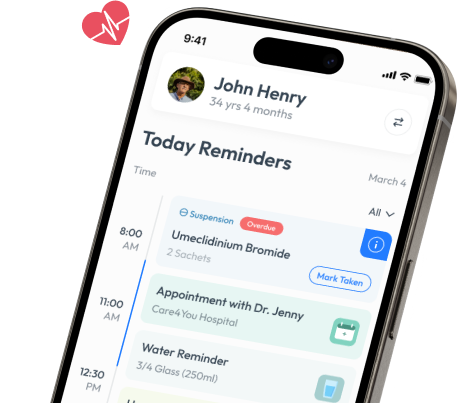
Digital reminders can help. Phone alarms. Apps designed for medication tracking. Smart speakers that announce medicine times. "It's time for your mother's evening medicine."
MediWatcher offers free medication reminders and dose tracking for Indian families. Features include family caregiver alerts so children living in different cities can know that medicines were actually taken.
The best tool is the one you'll actually use consistently. If you prefer pen and paper, that's fine. If you prefer an app, that works too.
Step 4: Build a Routine - The Secret Ingredient
Link medicine times to existing daily activities. Morning medicines with breakfast. Evening medicines with evening tea. Afternoon medicines with lunch.
Routines create automatic triggers. You don't have to remember. The activity itself becomes the reminder. Your brain: "Breakfast is happening, time for morning medicines."
Do medicines at exactly the same time every day. Same place. Same sequence. Consistency reduces confusion for both you and your parent.
Some families do it in the kitchen. Some have a specific chair in the bedroom. Somewhere consistent. Somewhere your parent knows "this is where medicine happens."
Start early with the routine. Make it boring and predictable. Boring is good. Boring means automatic. Automatic means fewer mistakes.
Step 5: Create a Tracking System - The Safety Net
Use a simple chart. Medicine name. Time. Date. Check box.
Tick off the box immediately after giving the medicine. Not five minutes later. Right then.
This prevents double-dosing. You can see at a glance what's been taken today. What's still due.
Keep the chart visible. On the fridge. Near the medicine cabinet. Somewhere you see it every day.
Some families use a small notebook. Day by day. Date at the top. Medicines listed. Checkmarks as they're given.
Others use a calendar. Write medicine names on each day. Check them off.
Physical tracking is important. You think you'll remember. You won't. Not every day for months. A tracking system is your memory.
Step 6: Set Up Safety Nets - Multiple Layers Of Protection
One system is good. Multiple systems are better.
Family members can share responsibility. If you have siblings, divide it. One person handles morning medicines. Another handles evening. Weekend coverage is shared.
Create a WhatsApp group. Send a quick message when medicines are given. "Morning meds done." Everyone stays informed. If someone forgets, others remind.
Use technology. Apps that track doses. Send reminders to your phone. Alert family members if a dose is missed.
A neighbor or friend can be a backup. Someone who knows about the system. Can check in. Can help if you're ill.
Multiple safety nets catch mistakes before they become problems.
When Your Parent Refuses Medicine: This Is Common
This happens very often. About 37% of caregivers deal with medicine refusal.
Your parent says no. Pushes the pill away. Spits it out. Gets angry. Refuses to cooperate.
Don't force it. Forcing creates more resistance. More anger. More distrust of you.
Try waiting and trying again later. Many caregivers report success with this approach. Give it 15-30 minutes. Come back calmly. Try again.
Only consider mixing medicine with food if both the doctor and pharmacist confirm it is safe for that specific medicine. Some tablets (especially extended-release or enteric-coated) must never be crushed. Always check first. Some medications are dangerous if taken with certain foods.
Understand why they're refusing. Is the pill too big and hard to swallow? Does it taste bad? Are they confused about what it's for? Are they scared of side effects? Are they depressed and not caring?
Addressing the root cause helps. If they can't swallow big pills, ask for smaller tablets or liquid form. If they're scared, explain what the medicine does. If they're confused, remind them gently.
Sometimes you need to pick your battles. If one medicine is consistently refused and it's not critical for survival, discuss with the doctor whether it can be stopped.
Signs You Need More Help: Listen To Yourself
Watch for these warning signs in yourself.
Constant worry about medicines. Making frequent errors. Feeling overwhelmed. Resentment building up toward your parent.
These aren't failures. They're signals. You need more support.
Talk to other family members. Share the load. Don't carry this alone.
Consider professional help. Home nurses. Day care centers. Respite care services. Even a few hours of relief makes a difference.
Join caregiver support groups. Online or in-person. Other families understand what you're going through. They have practical tips. Emotional support. People who get it.
Self-Care Isn't Selfish: You Matter Too
You can't pour from an empty cup. Taking care of your parent means taking care of yourself first.
Sleep when you can. Eat regular meals. Take breaks. Ask for help.
Caregiver burden is real. Studies show it affects your physical health. Your mental health. Your relationships. Your work.
It's okay to feel overwhelmed. It's okay to ask for help. It's okay to not be perfect.
When to Call the Doctor: Red Flags
Contact the doctor if you notice new or worsening confusion. Unusual drowsiness. Falls. Changes in behavior. Signs of medication side effects.
Bring the complete medicine list to every doctor visit. Every single medicine. Including over-the-counter and herbal products.
Ask about deprescribing. Some medicines might not be needed anymore. Stopping them safely can simplify your life and reduce side effects.
FAQs
Q1: What if my parent with dementia keeps forgetting they took their medicine?
This is very common. Use a pill organizer and mark off each dose immediately after giving it. Keep a written chart and tick boxes right away. Consider locked medication dispensers that only open at scheduled times. Never leave medicines accessible where they can be taken multiple times. The key is immediate documentation of every dose.
Q2: How do I know if I'm giving the right dose?
Keep medicines in original packaging with labels intact. Use a pill organizer filled weekly by checking the label multiple times. Double-check the label every time you give a dose. If unsure, call the pharmacist. Never guess. When in doubt, skip the dose and call the doctor rather than risking double-dosing or incorrect dosage.
Q3: Can I crush medicines and hide them in food?
Some medicines can be crushed. Others cannot. Extended-release tablets, capsules, and certain medications lose effectiveness or become dangerous if crushed. Always ask both the doctor and pharmacist first. They will tell you which medicines are safe to crush and which must be taken whole. Never assume it is safe.
Q4: What should I do if my parent refuses their medicine?
Don't force it. Wait 15-30 minutes and try again calmly. Only consider mixing medicine with food if both the doctor and pharmacist confirm it is safe for that specific medicine. Understand why they're refusing. Address the underlying concern (difficulty swallowing, fear of side effects, confusion about need). If refusal continues, talk to the doctor about whether the medicine is essential or can be stopped.
References
PMC. Prevalence of dementia in India: National and state estimates from a nationwide study. 2023. https://pmc.ncbi.nlm.nih.gov/articles/PMC10338640/
PMC. Size and Composition of Caregiver Networks Who Manage Medications for Persons Living With Dementia. I-JMR. May 2025. https://pmc.ncbi.nlm.nih.gov/articles/PMC12121532/
PMC. Managing medications together: a qualitative study of family caregivers. May 2026. https://pmc.ncbi.nlm.nih.gov/articles/PMC11603863/
This information is for educational purposes only and does not replace professional medical advice, diagnosis, or treatment. Always consult a qualified healthcare professional regarding any medical concerns.
Track Your Health with MediWatcher
Set dosage reminders, monitor vitals, log symptoms, and keep your family informed.
Download Free AppIn This Article
Track Your Health with MediWatcher
Set dosage reminders, monitor vitals, log symptoms, and keep your family informed.
Download Free AppTake control of your health today with MediWatcher.
Download now and experience the ease of managing your health.



We use cookies to improve your experience
We use cookies to personalise content and ads, to provide social media features and to analyse our traffic. We also share information about your use of our site with our advertising and analytics tools.