Medication Reminder for Seniors: A Complete Guide for Families and Caregivers
Your mother has been taking the same cardiac medication for twelve years. Yesterday she called asking if she’d already taken it. The day before she took it twice by accident. You’re watching this unfold and wondering when medication management became this complicated.
She’s not being careless. Her brain is juggling six different prescriptions right now. Different times. Some with food, some without. Bottles that all look the same. It’s a genuinely confusing schedule.
A medication reminder for seniors isn’t about forcing compliance. It’s about designing a system that makes a complicated medication schedule easier to follow. Your parent isn’t being lazy. When the schedule gets complicated (different times, different rules) it’s just harder to keep track of what was already taken.
Families dealing with this every day know how quickly a simple schedule can turn complicated. The tips below come from practical patterns that consistently help caregivers and older adults stay on track.
Understanding the Scope of the Problem
According to the most recent CDC data (2021–2022), nearly 9 in 10 older adults (88.6%) take at least one prescription medication. Many manage several at once. Separate research using national survey data has found that roughly 40–44% of adults aged 65 and older take five or more medications. Nonadherence is also common, although estimates vary widely depending on how it is measured.
That’s not minor. Missed doses are linked to higher rates of hospitalization and poorer health outcomes in older adults. Skipping blood pressure medicine can raise the risk of problems. Missing insulin doses can also lead to serious complications. The stakes are higher than many families realize.
Your aging parents aren’t unique in struggling. This is systemic. The healthcare system expects people to handle complicated medication schedules with very little help. You’re filling that gap by creating structure.
Step 1: Map the Complete Medication Schedule
Start with reality, not intention. Sit down with every bottle. Write down:
The medication name (both brand and generic if applicable)
Why they’re taking it (this matters because knowing the reason makes it easier to stick with)
Exact dosage and form (for example, 10 mg tablet versus 10 mg liquid, which can be absorbed differently)
Timing requirements (morning, evening, with food, on empty stomach, spacing between other meds)
Potential interactions (your parent’s supplement might clash with their blood thinner)
Your aging parent probably doesn’t have this written anywhere. Their doctor explained it once during an appointment. Your parent was stressed. They didn’t absorb it all.
Create a visual chart. Color-coding helps. Monday through Sunday across the top. Morning, noon, evening, bedtime down the side. That’s the foundation. Everything builds from here.
Step 2: Choose Your Medication Reminder Method
Physical Systems (Still Incredibly Effective)
The pill organizer remains best for many families. A weekly pill organizer with seven compartments lets you pre-sort everything on Sunday. Your parent grabs Monday’s doses. Zero decision-making required.
A better option for many is the daily pill organizer with time-stamped compartments. Morning section has everything they take at 8 AM. Noon section has everything for noon. This removes the “which medications go together” question.
Caregiver Medication App Solutions
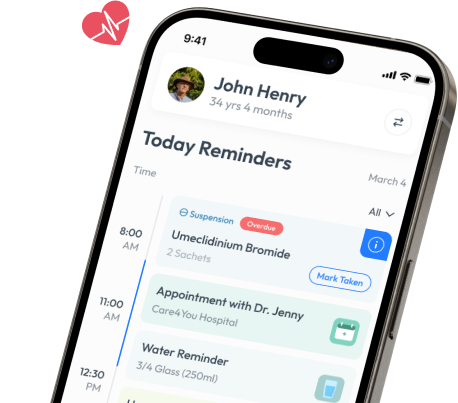
Modern caregiver medication apps changed everything. You set it up once with all their medications. The app sends automatic notifications to your parent’s phone. You can check progress without constant phone calls.
One free option many families use is MediWatcher, a pill reminder and medication tracker app. It lets you set personalized reminders for dosage and timing, and share the schedule with family or caregivers so everyone can stay in the loop through the medication logs and history. You add the medications and schedules once. After that, the app sends reminders and keeps a record of what has been taken.
Step 3: Address Multiple Medications Reality
Your parent isn’t just taking three medications. They’re managing arthritis medication, blood pressure control, thyroid replacement, diabetes management, cholesterol reduction, and a sleeping aid. That’s six bottles. The interactions matter.
Make a simple reference card using the exact instructions provided by the doctor or pharmacist:
Medication A: Take at the time and with/without food as instructed by your doctor or pharmacist
Medication B: Follow the prescribed timing and any spacing instructions
Medication C: Note any instructions about antacids, calcium, or other medicines
Laminate it. Put it on the refrigerator. Your parent has a question? They don’t call you. They look at the card.
Also inform your parent’s pharmacist about all supplements and over-the-counter medications. Your pharmacist can review the full list for potential interactions, including supplements and over-the-counter medicines.
Step 4: Build the Accountability Structure
This is where senior medication tracker systems actually work. You need confirmation. Not because you don’t trust your parent. Because humans forget.
If using an app like MediWatcher, set up notifications for yourself. Not for every dose. But spot checks. Three random times per week, check the shared schedule and medication history in the app.
If using physical pill organizers, check in during Sunday setup. Sit with them. Sort together. Talk about why each medication matters. This fifteen-minute weekly routine gives you a chance to spot problems early.
Also ask their doctor to emphasize medication importance during appointments. When the authority figure says “this matters,” patients take it more seriously.
Step 5: Simplify the Pharmacy Relationship
Most people use one pharmacy but don’t take full advantage. Talk to the pharmacy manager. Explain your parent’s situation. Many pharmacies offer services specifically for managing aging parents:
Synchronized refills (everything refills on the same day)
Pre-sorted medication packaging (pharmacy does the organizing)
Automatic refill programs that prevent running out
Pharmacist consultation calls
Pharmacy services vary by location, so ask your local pharmacist which refill, packaging, medication-review, or reminder services are available. MediWatcher can sit alongside those services as a free reminder and tracking tool that also lets family members stay involved through shared schedules and logs.
Practical Tips for Safer Medication Management
Use more than one reminder. One system will fail eventually. Two give you a backup. App notifications + a physical pill organizer + a note on the bathroom mirror works better than relying on any single method.
Schedule medications around existing routines. Your parent takes their morning pill with breakfast? Attach it to that. Evening medication goes by the toothbrush. Linking medicines to daily habits people already have makes it much more likely they’ll remember them.
Involve your parent in the system design. Ask what reminders work for them. Do they prefer alarms? Written notes? Voice calls? They’ll use a system they helped create.
Separate medication from emotional baggage. If your parent has struggled with addiction history, pill reminders can feel controlling. Frame it differently. “This helps me stop worrying” works better than “I’m checking up on you.”
Track adherence patterns. After two weeks, analyze what’s working. Is morning medication usually remembered but evening medication often missed? Talk to the doctor or pharmacist about whether the timing or reminder system can be adjusted. Adapt the system based on actual behavior, but don’t change medication timing without professional advice.
Do a quick mid-week check. A short text, a phone call, or just looking at the shared log is often enough to catch something before it becomes a pattern of missed doses.
When to Get Professional Help
If your aging parent has early cognitive decline, the system needs to get simpler, not more complex. Consider pharmacy-managed pre-sorted medications. Or move to assisted living where staff manages it.
If medication management is creating conflict in your relationship, that’s a sign something isn’t working. Get a social worker or geriatric care manager involved. They can introduce objective systems without family tension.
Frequently Asked Questions
Q1: How do I know if my elderly parent is actually taking their medications?
A tracking system can help. Pill organizers make it easier to see whether a dose is still there, but they aren’t foolproof. Apps like MediWatcher let you share the schedule and review medication history so you can see what was taken without constant calls or confrontation.
Q2: What’s the best medication reminder for elderly people who resist technology?
Start with physical systems like pill organizers or printed calendars. MediWatcher works well if you manage it yourself and share the schedule. Your parent can use the app or simply receive reminders while you handle the tracking.
Q3: How do I organize medications for an elderly parent who takes many different pills?
Use a weekly pill organizer, pharmacy pre-sorted blister packs, or a free tracker app like MediWatcher combined with pharmacy packaging. The best approach usually mixes physical organization with simple digital tracking for caregivers.
Q4: What do I do if my aging parent refuses to take their medications?
Medication refusal isn’t always about forgetting. Your parent might be worried about side effects, cost, too many pills, or whether they still need the medicine. Talk it through with the doctor or pharmacist instead of changing anything yourself.
Key Takeaways
Nearly 9 in 10 older adults take at least one prescription medication; many take five or more, and nonadherence rates for chronic regimens are commonly around 50%
Create a visual schedule before choosing a medication reminder system
Apps like MediWatcher work, but physical systems remain effective
Pharmacy services designed for elderly medication management are underutilized
Anchor medications to existing routines for better adherence
Multiple reminder systems create redundancy and can help reduce missed doses.
MediWatcher’s free pill reminder and medication tracker app helps you track medications, set reminders, and share the schedule with family and caregivers
Important: Never stop or change any medicine without first talking to the doctor or pharmacist.
For families managing aging parents’ medications, a free tool like MediWatcher can help with tracking, reminders, and sharing the schedule with caregivers. Use whatever combination of systems works for your parent as the goal is consistency and safety, not perfection.
Sources
CDC/NCHS: Prescription Medication Use, Coverage, and Nonadherence Among Adults Age 65 and Older: United States, 2021–2022
https://stacks.cdc.gov/view/cdc/160016
(PDF: https://www.cdc.gov/nchs/data/nhsr/nhsr209.pdf)Trends in Number and Appropriateness of Prescription Medication Utilization Among Community-Dwelling Older Adults in the United States: 2011–2020 (polypharmacy data)
https://pubmed.ncbi.nlm.nih.gov/38644631/Clinical guidance on medication reconciliation (review of prescriptions, OTC medicines, and supplements)
https://www.ncbi.nlm.nih.gov/books/NBK2644/
This information is for educational purposes only and does not replace professional medical advice, diagnosis, or treatment. Always consult a qualified healthcare professional regarding any medical concerns.
Track Your Health with MediWatcher
Set dosage reminders, monitor vitals, log symptoms, and keep your family informed.
Download Free AppIn This Article
Track Your Health with MediWatcher
Set dosage reminders, monitor vitals, log symptoms, and keep your family informed.
Download Free AppTake control of your health today with MediWatcher.
Download now and experience the ease of managing your health.



We use cookies to improve your experience
We use cookies to personalise content and ads, to provide social media features and to analyse our traffic. We also share information about your use of our site with our advertising and analytics tools.