How to Never Miss a Dose: 10 Proven Medication Reminder Strategies
Your father forgets his BP tablet again. Your mother skips her diabetes medicine because she’s busy cooking. Sound familiar? In India, studies show that nearly half of patients with chronic diseases miss their medication regularly. The good news? Simple, practical solutions exist that actually work for Indian households.
Why Missing Medication Matters More Than You Think
Missing doses isn’t just about forgetting. It’s about health getting worse slowly. Studies based on WHO-SAGE data from India found that only about 51% of older adults with chronic conditions such as diabetes, hypertension or heart disease take their medicine as prescribed. The rest skip doses, delay them or stop altogether. Globally, the World Health Organization has long estimated that only about 50% of patients with chronic diseases in developed countries follow their long-term treatments correctly. Rates are often lower in developing countries.
The reasons are real and relatable. Forgetfulness tops the list. But other common reasons include: too many medicines, lack of family support, cost issues, not understanding the disease properly, or just being too busy with daily life. For elderly parents living with nuclear families, the risk is even higher.
How to remember to take medication starts with understanding why doses get missed in the first place.
10 Strategies That Actually Work for Indian Families
1. Link Medicine to Daily Habits (Habit Stacking)
This works because it uses what you already do. Take medicine right after brushing your teeth in the morning. Or with evening tea. Or right before dinner. The key is picking a habit that happens every single day without fail.
For Indian homes, breakfast or dinner time works best. Most families eat together. So, keep the medicine box on the dining table. Not in the bedroom. Not in the kitchen cabinet. Keep it where you can see it during meals.
2. Use a Weekly Pillbox (Not Daily Boxes)
Daily pillboxes need refilling every day. That’s one more thing to remember. Weekly pillboxes solve this. Fill it once on Sunday. Done for the whole week.
Choose one with clear compartments marked morning, afternoon, night. Many Indian pharmacies sell these for Rs 150-300. Online options may be cheaper. The visual cue of an empty compartment tells you immediately if medicine was taken.
For elderly parents, children should fill the pillbox every week. Make it a Sunday ritual. Takes 5 minutes. Prevents 7 days of confusion.
3. Set Phone Alarms with Specific Names
Generic alarms don’t work. “Alarm 1” at 9 AM means nothing. But “Papa’s BP tablet” or “Mummy’s diabetes medicine”? That’s clear.
Set multiple alarms if there are multiple medicines. Use the phone’s voice note feature to record what each alarm means. Even better: use family group chats. When the alarm rings, someone else can also remind.
Most smartphones now have built-in reminder apps. Use them. They’re free.
4. Keep a Medicine Chart on the Wall
This old-school method still works. Stick a simple chart near the dining area or prayer room. Mark days of the week. List medicines with tick boxes.
After taking medicine, put a tick. Family members can see at a glance. Grandparents who don’t use phones find this easiest. Children can check the chart before leaving for school or work.
Use a whiteboard or sticky notes. Change it weekly. Keep it visible. Not hidden in a drawer.
5. Involve the Whole Family
In joint families, this happens naturally. Someone always notices. In nuclear families, it needs effort. Assign one family member as the “medicine in-charge”. Rotate weekly if needed.
Create a WhatsApp group just for medicine reminders. Send a quick “Done” message after taking medicine. If no message comes by 10 AM, someone calls to check.
This works especially well when children live in different cities. They can call parents daily. Ask one simple question: “Took your medicine?”
6. Use a Free Medication Reminder App
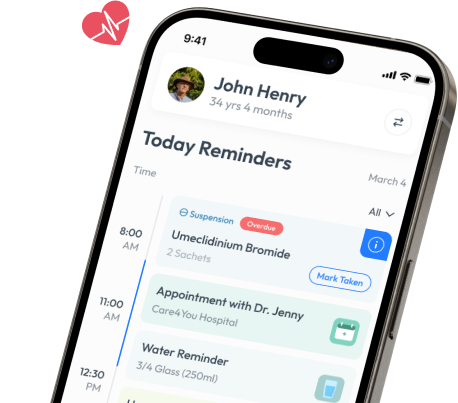
Several apps exist, but many charge money or show too many ads. For Indian families, MediWatcher offers a good balance. It's free, sends reminders, tracks doses, and can alert someone if medicine is missed.
The advantage of apps over phone alarms? They track what's been taken. They show patterns. They help family members stay informed even from different cities.
For elderly parents, children should set up the app first. Add all medicines. Set reminder times. Test it together for a week. Then let parents use it.
7. Link Medicine Intake to Prayer or Puja Time
For religious families, this is powerful. Morning puja happens daily. Evening aarti too. Keep medicine near the puja area. Take it right after prayers.
This creates a spiritual connection. Medicine becomes part of the daily routine, not a burden. Many elderly Indians find this more meaningful than phone alarms.
8. Keep Emergency Doses in Multiple Locations
Life happens. Travel, guests, power cuts, phone battery dead. Keep one extra dose in a cool place in the office bag or with a trusted neighbour if needed. Avoid leaving medicines in a parked car for long periods.
Important: Check expiry dates regularly. Extreme heat inside cars during Indian summers can damage many medicines and reduce their effectiveness.
For frequent travelers, carry a small pill case always. Not the full weekly box. Just 2-3 days’ supply. This prevents complete misses during unexpected situations.
Keep medicines in original packaging when possible. This helps identify them if needed and protects from moisture.
9. Schedule Monthly Medicine Reviews
Every month, check what medicines are running low. Visit the doctor if prescriptions need renewal. Many families wait until medicine finishes completely. Then panic.
Set a calendar reminder: “First Sunday of every month - medicine check”. Review what’s working. What’s being missed. Adjust timings if needed. Discuss with the doctor if side effects are causing skips.
10. Understand Why Each Medicine Matters
This is important but often missed. Patients skip medicines they don’t understand. “Why take this daily if I feel fine?” is a common question.
Spend 10 minutes with the doctor. Ask: What happens if I skip this? When will I see benefits? What are the side effects? Understanding creates motivation.
For elderly parents, children should attend doctor visits. Take notes. Explain in simple language later. Use examples they understand. “This tablet keeps your BP controlled so you don’t get dizzy while walking.”
Pill Schedule Tips for Complex Medicine Routines
Some patients take 5-6 different medicines. Some need to be taken on an empty stomach. Some with food. Some can’t be taken together. This gets confusing fast.
This is what works:
Group by timing: All morning medicines together. All night medicines together.
Use color coding: Red sticker for empty stomach. Green for after food.
Create a simple chart: Time | Medicine | Food requirement | Tick box
Ask the doctor to simplify: Sometimes multiple medicines can be combined into one.
Common Mistakes to Avoid
Don’t keep medicines in the bathroom: Heat and humidity from showers can damage tablets and reduce their effectiveness
Don’t mix old and new prescriptions: Clear out expired medicines every 3 months. Return them to a pharmacy for safe disposal if possible.
Don’t skip because you feel better: That’s when medicine is working
Don’t stop due to side effects without asking the doctor: Alternatives often exist
FAQs
How do medication reminder apps work?
Apps like MediWatcher send alerts at set times, track which doses you've taken, and can notify family members if you miss a dose. Most work in local languages and don't need constant internet connection.
What if I miss a dose?
What to do after a missed dose depends on the medicine. Check the medicine label or ask your doctor or pharmacist. Do not take a double dose unless a healthcare professional tells you to.
How to remember to take medication when traveling?
Carry medicines in your hand luggage, not checked bags. Keep a copy of prescriptions. Set phone alarms as usual. Inform a family member about your travel schedule.
Is MediWatcher free to use?
Yes, MediWatcher offers free core features including unlimited medication reminders, dose tracking, and family caregiver alerts. The app is designed for Indian families and works without requiring payment for basic medication reminder functionality.
What if elderly parents refuse to use phones or apps?
Use wall charts, pillboxes, and link medicine to daily habits like prayer or meals. Family members should call daily to check. Simple methods work best for those uncomfortable with technology.
Are there medicines where missing a dose is especially dangerous?
Yes. Medicines for conditions like epilepsy, blood clots, heart rhythm problems, diabetes, and organ transplants need very careful timing. Missing even one dose can be risky. If you take these medicines, talk to your doctor about what to do if you miss a dose. Keep emergency contact numbers handy.
When to Call Your Doctor
Contact your doctor or pharmacist if:
You miss multiple doses in a row
You're having side effects that make you want to skip doses
You're running out of medicine and can't get a refill
You're unsure what to do after missing a dose
You're thinking about stopping the medicine
Your doctor can help. They may adjust the dose, change the timing, or suggest alternatives. Don't suffer in silence.
The Bottom Line
How to remember to take medication isn’t about fancy solutions. It’s about simple, consistent habits that fit Indian family life. Start with one or two strategies. A pillbox plus phone alarms. Or habit stacking plus a family WhatsApp group.
What matters is consistency, not perfection. Some days will be better than others. That’s normal. The goal is building a system that works for your specific family situation.
Small changes make a big difference. For most medicines, one missed dose occasionally won't cause serious harm. But regular skipping does. Some medicines, like those for epilepsy or blood thinners, are exceptions. Ask your doctor about your specific medicines. Pick strategies that feel doable. Not overwhelming. Not expensive. Just practical.
If you want a simple free app to get started, try MediWatcher. It covers the basics without costing anything.
Your parents' health depends on it. Your own health too. Start today. Not tomorrow. Today.
References:
WHO-SAGE Study India. Factors Influencing Adherence to Chronic Disease Medication Among Older Adults. Age and Ageing, 2023. https://academic.oup.com/ageing/article/52/Supplement_2/afad104.064/7227406
World Health Organization. Adherence to Long-Term Therapies: Evidence for Action. 2003. https://pmc.ncbi.nlm.nih.gov/articles/PMC12096470/
Medication Adherence and its Predictors in Patients With Type 2 Diabetes in India. PMC, 2026. https://pmc.ncbi.nlm.nih.gov/articles/PMC12914141/
MedlinePlus. Storing Your Medicines. U.S. National Library of Medicine. January 2026. https://medlineplus.gov/ency/patientinstructions/000534.htm
NHS Specialist Pharmacy Service. Advising on Missed or Delayed Doses of Medicines. March 2025. https://www.sps.nhs.uk/articles/advising-on-missed-or-delayed-doses-of-medicines/
NHS. Anticoagulant Medicines - Dosage. 2025. https://www.nhs.uk/medicines/anticoagulants/dosage/
This information is for educational purposes only and does not replace professional medical advice, diagnosis, or treatment. Always consult a qualified healthcare professional regarding any medical concerns.
Track Your Health with MediWatcher
Set dosage reminders, monitor vitals, log symptoms, and keep your family informed.
Download Free AppIn This Article
Track Your Health with MediWatcher
Set dosage reminders, monitor vitals, log symptoms, and keep your family informed.
Download Free AppTake control of your health today with MediWatcher.
Download now and experience the ease of managing your health.



We use cookies to improve your experience
We use cookies to personalise content and ads, to provide social media features and to analyse our traffic. We also share information about your use of our site with our advertising and analytics tools.