Vaccine and Immunization Tracking for Your Whole Family
Your baby just turned 6 weeks old. The doctor gave you a piece of paper listing vaccines. Multiple vaccines. Different dates. Different ages. Your head is spinning.
“When exactly does the next vaccine happen?” you ask.
The doctor points to the paper. “Follow this schedule.”
You nod. Put the paper somewhere “safe.” Which means you’ll lose it in three months.
This happens to thousands of parents every year. You get a vaccine schedule. It seems manageable at first. Then life happens. You move. The paper gets damaged. You forget when the next vaccine is due.
Your child misses a vaccine. Not because you don’t care. Just because tracking became too complicated.
Now there’s a better way. Digital tracking. One app. One place. Reminders. Fewer missed doses.
Why This Actually Matters (Real Numbers)
Research shows that when families get reminder messages about vaccines, they actually show up for appointments. The number isn’t small either.
A large U.S. study followed 57,893 adults who were eligible for a COVID booster. Some got reminder messages. Some didn’t. The people who got reminders had nearly 33% higher booster uptake. In absolute terms, the increase was 0.86 percentage points, from 2.65% to 3.51%. That’s meaningful.
Another set of studies looked at influenza vaccines. Same thing. Text reminders can work. They’re simple but effective. People forget stuff. Reminders help them remember.
These studies were about boosters and adult vaccines. But the same principle applies to your child’s vaccines. Reminders help. A lot.
Your child’s vaccine schedule in 2026 includes protection against many diseases. The Indian Academy of Pediatrics finalized updated recommendations in late 2025, with the revised guidance published in 2026. Read the IAP ACVIP recommendations. Some vaccines are part of India’s government schedule, while others are recommended by IAP and may be available through private providers. Each one has specific timing.
BCG and Hepatitis B at birth. Then DTwP at 6 weeks, 10 weeks, 14 weeks. IPV and other vaccines follow a similar early-infant schedule. MMR at 9 months and then again at 15 months. HPV vaccination starts from age 9. And more.
Missing even one dose can leave your child less protected against diseases that are actually dangerous. Measles. Polio. HPV-related cancers later in life.
It’s not paranoia. It’s real protection.
What Your Child Actually Needs (The Actual Schedule)
Your baby usually gets BCG, OPV (birth dose), and the Hepatitis B birth dose at birth. Ideally, before leaving the hospital.
At 6 weeks: DTwP/DTaP, IPV, Hib, Hepatitis B, Rotavirus, and PCV (pneumococcal). Under the government schedule, OPV is also given.
At 10 weeks: Same vaccines again. It’s not a mistake. They need multiple doses for immunity.
At 14 weeks: Again.
The exact schedule can be different depending on whether your child is following the government schedule or the IAP/private schedule. Your pediatrician can tell you which vaccines are due and when.
Then other vaccines at different ages. Influenza vaccination starts from 6 months and is generally given annually. Children receiving it for the first time may need two doses, four weeks apart, depending on their age and previous vaccination history. MMR again at 15 months. Typhoid vaccine. Hepatitis A. Varicella.
HPV vaccination can start from age 9. Recommendations can vary by age, guideline, vaccine product, and medical history. Confirm the number of doses with your pediatrician. Tetanus-containing boosters may be recommended during adolescence and then every 10 years, depending on vaccination history and medical circumstances.
That’s a lot of appointments. A lot of dates to remember. A lot of chances to mess up.
Digital Tracking Actually Changes Things (How It Works)
You download an app. Create profiles for each child. Input their birth dates. If the app supports an immunization schedule, it can estimate when each vaccine is due.
One week before the appointment, you get a reminder. “Your child’s MMR vaccine is due in 7 days.”
Three days before: another reminder.
On the due date: another reminder.
You schedule the appointment. Take your child. Get vaccinated. Mark it done in the app.
The app tracks everything. You never wonder “did we get the polio vaccine?” You look at the app. It shows every vaccine completed.
If the app supports report generation, you may be able to create a clean PDF and share it with a school or doctor when needed. Check whether the receiving institution accepts digital records.
Multiple family members can see the same information, if the app supports shared access. Your spouse sees the reminders too. Your mother-in-law can check if she’s watching the kids. Shared responsibility.
What the 2025 Updates Actually Changed
The IAP recommendations were updated. Let’s see what’s different from older schedules.
Influenza vaccine: The 2025 IAP recommendations replaced quadrivalent influenza vaccines with trivalent formulations. Influenza vaccination remains annual, and the IAP guidebook recommends continuing annual vaccination until age 5. Children receiving the vaccine for the first time may need two doses four weeks apart.
HPV vaccine: The updated IAP recommendations allow immunocompetent girls aged 9–15 to receive a single dose. Recommendations for boys and for children outside this age range may vary by guideline, vaccine product, and medical history. Parents should confirm the schedule with their pediatrician.
Rabies vaccine: After certain animal bites or exposures, post-exposure vaccination may involve five intramuscular doses on days 0, 3, 7, 14, and 28. Rabies immunoglobulin or a rabies monoclonal antibody may also be needed, depending on the exposure category. Seek medical care immediately rather than relying on an app to calculate treatment.
RSV protection: There’s a monoclonal antibody called nirsevimab for respiratory syncytial virus. IAP does not currently recommend universal use for all infants in India. It may be considered for high-risk babies after discussion with the parents and a pediatrician. Premature babies. Babies with heart or lung problems. Other babies may not need it.
If the app supports schedule updates, it may help you keep track of changes. Always confirm medical decisions with your pediatrician.
Setting This Up (Actual Steps)
First, create a profile for each child. Enter their birth date exactly. The app may use this information to estimate when each vaccine is due.
Then go through the schedule. Mark which vaccines your child already got. Input the dates you remember. Check the vaccination card if you still have it.
Set up reminders. One week before due date. Three days before. On the due date. Pick times that work for you.
You can also record whether a vaccine was received through the government programme or through a private clinic. Government availability and private-clinic pricing can vary by vaccine, location, and programme.
Then follow the reminders. When you get one, confirm the appointment with your healthcare provider. Take your child. After the vaccine is given, mark it in the app. The next reminder may then be scheduled automatically.
Common Problems Families Face (Real Situations)
You lost the vaccination card. Happened to many families. Now you don’t know what vaccines your child got.
Solution: Get a new card printed at the clinic. Then enter the data into the digital app from memory, or ask the clinic to provide records. Once it’s stored digitally and backed up securely, it is less likely to be lost with the paper card.
Your child got vaccines at multiple clinics. One at the government clinic. One at a private pediatrician. One at a camp. Now you have records scattered everywhere.
Solution: Input all of them into one app. One central place. Everything together.
You moved to a different city. Your new pediatrician wants to see vaccination records. You can’t find the papers.
Solution: A digital record can go with you. If the app supports PDF sharing, you may be able to send the report to your new pediatrician. No searching through boxes.
Your child needs a catch-up vaccine because the schedule got disrupted. You don’t know how to adjust the timeline.
Solution: Some apps include catch-up scheduling. They may show overdue vaccines and help organize a catch-up plan. But the final timing must follow the minimum intervals and your pediatrician’s advice.
The Important Part: Why Vaccines Exist And What They Do
Vaccines work by showing your child’s immune system what a disease looks like. Then the body learns to fight it. If your child actually encounters the disease later, the immune system already knows what to do.
It’s like a practice drill. Your body practices fighting the disease without actually getting sick.
Different vaccines protect against different diseases. Polio vaccine protects against polio, which can cause paralysis. MMR protects against measles, mumps, and rubella; three different diseases that can cause serious complications.
Vaccines are given in a schedule because your child’s immune system and disease risks change at specific ages. Giving a vaccine before the recommended minimum age or interval may not count as a valid dose. Giving it too late leaves a gap where your child is less protected.
That’s why timing matters. That’s why tracking matters.
How MediWatcher Helps You Track Family Vaccinations
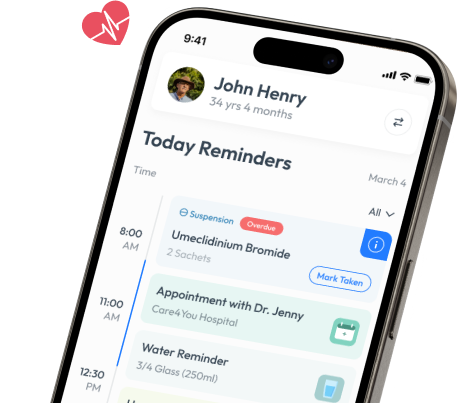
MediWatcher isn’t only for medicines. You can use it to keep your family’s vaccination records and dates in one place.
Create profiles for your children, parents, or other family members. Add the vaccines they have already received. Enter the vaccination date. Then add the next due date and set a reminder.
No more searching through old vaccination cards.
No more asking, “Did we already get this vaccine?”
MediWatcher also lets you store digital copies of immunization records in your health record vault. Take a photo of the paper vaccination card or upload the record so you have a backup when you need it.
You can set reminders for upcoming vaccinations and keep track of which doses are completed. The app also supports multi-member profiles, so you can manage the schedules of children, parents, and elderly relatives from one place.
Need to share information with a doctor? MediWatcher lets you keep health records together and export health information when needed. You can also share access with caregivers or loved ones, so someone else can help keep track of appointments and reminders.
The app’s medication reminders, health logs, appointment tracking, caregiver alerts, and vaccine tracking all work together. One place for the whole family. Less paperwork. Less confusion.
MediWatcher is not a replacement for your pediatrician. It helps you remember and organize. Your doctor still decides which vaccines your child needs and when.
MediWatcher brings medication reminders, health tracking, caregiver support, and health reports together in one place. Explore MediWatcher’s features.
What MediWatcher Helps You Do
Create profiles for children, parents, and other family members.
Track vaccines that have already been given.
Add upcoming vaccine due dates.
Set reminders for vaccinations and appointments.
Store digital copies of immunization records.
Share access with caregivers or family members.
Keep medication, vaccination, and health information together.
Key Takeaways
Reminder messages increased COVID booster uptake by about 33% relative to the control group in a large U.S. adult trial.
India has a government immunization schedule and an IAP-recommended schedule with additional vaccines.
Digital records reduce the risk of losing paper vaccination records.
The 2025 IAP update changed guidance on trivalent influenza vaccines, nirsevimab, HPV vaccination, and rabies post-exposure vaccination.
HPV recommendations can vary by age, sex, guideline, vaccine product, and medical history.
One app can help organize records for multiple family members if those features are supported.
Reminders can help families remember upcoming appointments.
Always confirm catch-up schedules and medical decisions with a pediatrician.
FAQs
Q1: What happens if my child misses a vaccine dose?
Your child can usually catch up later, and a vaccine series generally does not need to be restarted because of a delay. The correct catch-up timing depends on your child’s age, previous doses, vaccine product, and the minimum interval between doses. Talk to your pediatrician.
Q2: Can I combine government and private vaccines on the same schedule?
Yes, government and private vaccines can often be recorded together, but the exact plan should be confirmed with your pediatrician. The government’s Universal Immunization Programme provides a core schedule, while the IAP-recommended schedule includes additional vaccines that may be available through private providers. You can usually mix records from both sources in the same digital tracker.
Q3: Do I really need to track adult boosters too?
Some adults need tetanus-containing boosters, often at 10-year intervals, depending on their vaccination history and medical situation. Influenza vaccination is generally annual for people for whom it is recommended, especially those at higher risk of complications. Ask a doctor to review the vaccination needs of parents and grandparents rather than applying one schedule to every adult.
Q4: Is the vaccine schedule the same for all children in India?
The basic government schedule is intended to apply nationally, but implementation can vary by state, district, and vaccine programme. The IAP-recommended schedule includes additional private vaccines. Some children may also need different recommendations because of health conditions, travel, outbreaks, previous doses, or delayed vaccination. Talk to your child’s doctor about the schedule that applies to your situation.
This information is for educational purposes only and does not replace professional medical advice, diagnosis, or treatment. Always consult a qualified healthcare professional regarding any medical concerns.
Track Your Health with MediWatcher
Set dosage reminders, monitor vitals, log symptoms, and keep your family informed.
Download Free AppIn This Article
Track Your Health with MediWatcher
Set dosage reminders, monitor vitals, log symptoms, and keep your family informed.
Download Free AppTake control of your health today with MediWatcher.
Download now and experience the ease of managing your health.



We use cookies to improve your experience
We use cookies to personalise content and ads, to provide social media features and to analyse our traffic. We also share information about your use of our site with our advertising and analytics tools.